
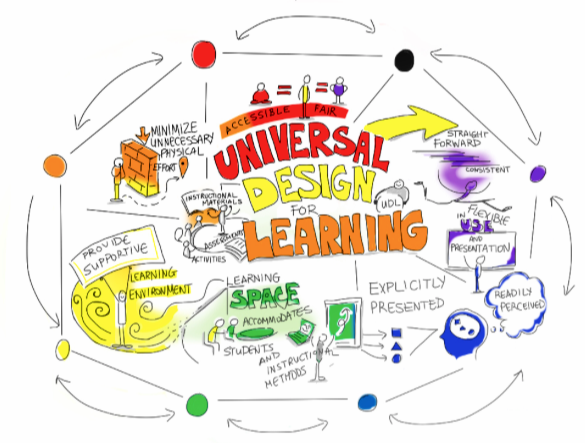
Universal Design for Learning
Universal Design for Learning principles include multiple means of engagement, multiple means of representation and multiple means of action and expression. The more I read about Universal Design for Learning, it made me want to incorporate it more into my future classroom. I want to be able to do as much as I possibly can to help my future students to be successful in my class and even in life. Having multiple means in the ways I will teach, assess the students and engage my students is definitely what I want to do. I do not want to become a boring teacher who just tosses up 50 slides a day only and uses paper tests as assessments. I want to be a creative classroom where my students can prove to me that they know the knowledge in any way that they are comfortable.
How can technology help teachers individualize teaching materials to make learning engaging and challenging for all students?
Technology has come so far since I was in school and I am so interested in all the many forms of technology that educators are integrating into their classrooms. By the use of technology, students could be given the information, have multiple means of engagement and even be assessed using a form of technology. For example, PearDeck is an interesting way to teach students because the teacher can ask questions of the students and they can respond using technology. The teacher can even lock all the screens of the students, that way the teacher knows everyone is paying attention and learning. Technology can be used to come of with many forms of engaging activities for students to be able to learn and get their hands on the activity to really understand. For example, if students are learning about currency, fake currency can be bought and provided to the students so they can see what each coin looks like and can learn from it. On the website Symbaloo, there are many games for math where learning about currency usually is integrated. Symbaloo has games where students can practice adding prices on items to get a total cost. Using technology to have students use games to learn is also a great way to keep the attention of students. Students who are bored in a class may not be as willing to learn from that educator.
How does Universal Design for Learning apply to assessments?
Universal Design for Learning can apply on assessments because an assessment of a student can be preformed multiple ways. Some students are okay with taking a 20-question test, while others may feel that a 20-question test does not assess their knowledge properly. I know for myself growing up, I always got anxiety before taking tests (especially very important ones) and that anxiety would cause my mind to go blank on the test. I would know the content that the test was about, but just could not think of the answers. It was crazy that I dealt with that and having some form of Universal Design of Learning could have helped me growing up in school. Having the students be assessed in multiple ways can confirm that the content taught was actually absorbed and interpreted correctly by the students. The chapter discussed that having multiple means of representation is very important for a student to be able to understand what is being taught. People learn in different ways, so just reading from a textbook and teaching from slides will not be enough for every students needs. Students with dyslexia would struggle taking a typical test on paper, but if they could record a video or create something related to the content in place of a typical test, I feel that should be considered and integrated into classrooms.
How does Universal Design for Learning help maintain high standards and goals for every learner?
I feel that Universal Design for Learning helps to maintain high standards and goals for every learner because all students are able to benefit and be successful under this system. Teachers should integrate this kind of learning into their classrooms in order to help every student that they have. Students being taught with this program will have options in how they would like to learn or how they are assessed about the knowledge that they gained. For example, a student may not have good handwriting, so they would prefer to make a video answering all the questions being asked on the quiz or test. Teachers being flexible is definitely great and letting their students prove that they know the content in other forms besides a test is more fun in my opinion.
 Emily's Educational Thoughts